


OrganizEat: Recipe Keeper Book
4.5396.00 Reviews
App Specs
- Version
- 2.8
- Updated On
- License
- Free
- Downloads
- 100,000+
- Developer
- OrganizEat LTD: recipe keeper box organizer app
- Categories
- Food & Drink
- Platform
- Android
Screenshots

 Analysis by AppCompare
So, I stumbled upon this little gem called OrganizEat: Recipe Keeper Book the other day, and let me tell you, it’s been a game-changer for my kitchen adventures. If you’re anything like me, juggling between digital recipes, grandma’s handwritten notes, and a bunch of bookmarked web pages, then this app might just be your new best friend.
What stands out to me is not a complicated cooking tool but the simple idea of gathering recipes that would otherwise live in several different places. The photo-and-screenshot workflow is the useful center of the experience: rather than retyping a recipe card or trying to remember which browser tab held a dish, I can keep a copy with the rest of my collection. That makes the app most valuable over time, as the collection grows and the same recipes become easier to return to.
Why a digital recipe box helps
I find a recipe keeper most helpful when the recipes I actually cook are scattered across formats. A handwritten note may have a family variation, a screenshot may preserve something found online, and a saved web page may be hard to locate again. Putting these items in one personal cookbook gives them a shared home without requiring me to turn meal planning into a separate hobby. I can keep the practical dishes I make on weeknights alongside the special ones I save for guests.
That does not mean every recipe becomes magically tidy as soon as it is captured. A photo of an old card still depends on being readable, and a screenshot can preserve details in a less structured way than a carefully entered recipe. I treat capture as the first step, not the whole job: when I save something I know I will use, I take a moment to give it a helpful category or tag. A little attention at the beginning makes later searching far less frustrating.
All Your Recipes in One Place
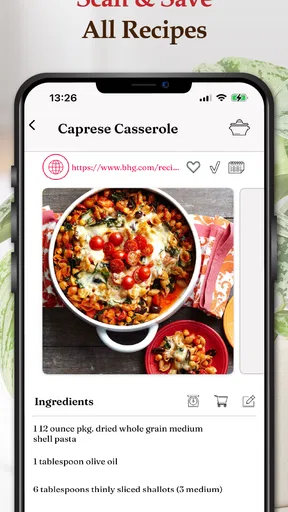
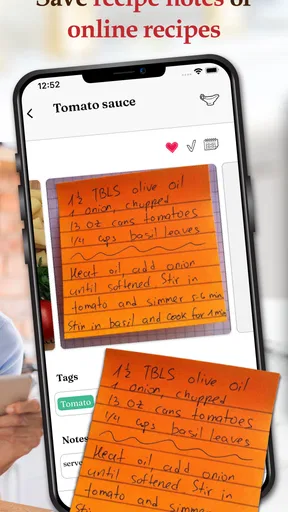
First things first, the convenience of having all your recipes neatly organized in one spot is unmatched. With OrganizEat, you can simply snap a picture of a recipe card or upload a screenshot, and boom, it’s stored in your digital cookbook. No more rifling through drawers or googling that "chicken thing" you made last month.
The photo option is particularly appealing for people who want to keep the original character of a recipe. A family card may include a handwritten correction or a note in the margin that matters just as much as the ingredient list. I would keep that image rather than spending time transcribing every detail, then use a clear title and a category to make it findable. For a recipe I use frequently, I would be more careful about organizing its entry, because finding it quickly matters more than preserving a perfectly complete archive.
This is also a sensible way to deal with the recipes that arrive in bursts: a friend sends a screenshot, someone shares a family dish, or I come across an idea while browsing. Instead of trusting myself to remember where it came from, I can save it while it is in front of me. The important habit is to avoid treating the app as a dumping ground. If I capture twenty recipes and never label any of them, I have only moved the mess from paper and browser tabs to a screen.
Worth Reading Before You Choose

Flipboard Shows What News Apps Must Do Beyond the Feed

Switching to Android Auto Means Rethinking Your Driving Routine

Google Calendar Makes a Crowded Week Easier to Manage

Ludo King Makes the Most of the Minutes Between Plans

Baby Panda World Brings Quick Play to Modern Phones, but Its Game Library Feels Busy

ESPN’s Live Game View Makes Following Close Games Easier
The app is available on both Android and iOS, so whether you’re team Apple or Android, you’re covered. I personally found the interface super intuitive. Even if you’re not tech-savvy, you’ll get the hang of it in no time. The layout is clean, and everything is just a tap away. Trust me, your inner chef will thank you.
For someone deciding whether to try it, the basic practical details are straightforward: this is a free Food & Drink app from OrganizEat LTD: recipe keeper box organizer app, with a Everyone content rating. It has a 4.5 average from around 1.1 thousand ratings, and has passed 100 thousand installs. The current version is 2.68, and it first appeared on March 28, 2018. Those figures suggest that it has found an audience, but I would still judge it by whether its recipe-box approach fits my own habits rather than by popularity alone.
Customizing for the Win
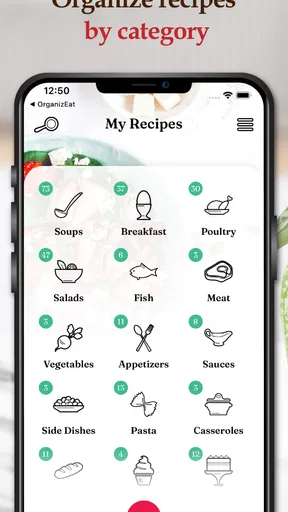
One of the coolest features is the ability to customize your recipe entries. You can add categories, tags, and even rate your dishes. If you’re hosting a party, searching through your "quick and easy" or "crowd-pleasers" categories makes planning a breeze. Plus, the search function is robust, allowing you to find exactly what you need when you need it.
The practical payoff of categories and tags is that they let me search by the reason I need a recipe, not only by its name. I might remember that a dish is a reliable weeknight meal but forget whether I called it “baked chicken” or “lemon tray dinner.” A tag such as “weeknight” or “make ahead” can bridge that gap. Ratings are useful in a different way: they can distinguish recipes I have actually cooked and liked from ideas I saved but have not tested. I would use those personal signals rather than trying to build an elaborate classification system.
A small but helpful routine is to use a consistent vocabulary. If I tag one recipe “fast” and another “quick,” the distinction may not mean anything when I am hungry and searching. Choosing a few everyday labels—such as family favourite, guests, or pantry staples—keeps the collection readable. The point is not to catalogue every detail. It is to make the app answer the question I am likely to ask while deciding what to cook.
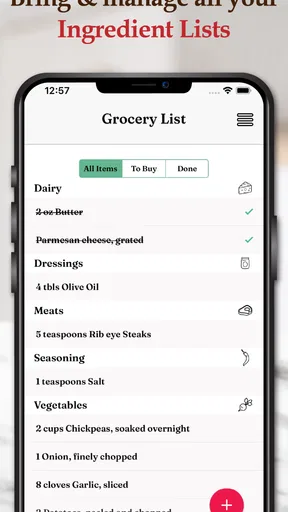
And let’s not forget about the shopping list feature! I can’t count how many times I’ve left the store only to realize I forgot a crucial ingredient. With OrganizEat, you can add ingredients from your recipes directly to a shopping list. It’s like having a personal kitchen assistant in your pocket.
This link between saved recipes and shopping is most useful when I choose a meal before leaving home. I can check the recipe, add what I need, and use the list as a reminder in the shop instead of copying ingredients onto another scrap of paper. I would still review the list before heading out: if the pantry already has an ingredient, it makes sense to remove or account for it rather than buying it twice. That quick check keeps a digital list helpful instead of turning it into an unquestioned order.
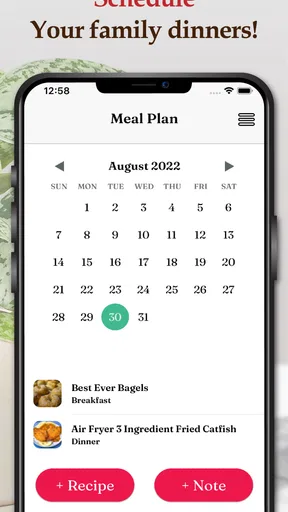
A realistic use case is planning a few dinners for a busy week. On a quiet evening, I could look through the recipes I have already saved, pick dishes that suit the days ahead, and add their ingredients to the shopping list. At the store, the list is more useful than trying to recall ingredients from memory. Later, when plans change, the same collection gives me alternatives without starting a fresh search online. It is not a full meal-planning system in the sense of doing the decisions for me; it is a way to make my own decisions easier to carry through.
Sharing is Caring
Another nifty feature is the sharing option. Got a friend who’s been begging for your secret lasagna recipe? You can easily share it via email or social media. It’s these little things that make OrganizEat not just a recipe keeper, but a community builder.
I see sharing as especially useful for family recipes and small exchanges between friends. If someone asks how I made a dish, sending the saved recipe is less work than finding the original message or taking another picture of a card. It can also help when a household shares cooking: one person can pass along a recipe to another rather than relying on memory or a hurried explanation. The value here is convenience and continuity, not a social network I would expect to browse for inspiration.
There is a trade-off in how much effort I would put into a recipe before sharing it. A quick capture may be perfectly adequate for my own reference, but a recipe intended for another cook benefits from a clear name and readable details. I would check that the image or entry makes sense to someone who was not there when I saved it. That small edit is worthwhile when the recipe is meant to travel beyond my own phone.
Now, I did find that while the app is packed with features, it doesn’t overwhelm you. Instead, it feels like it’s designed to adapt to your needs, whether you’re a culinary novice or a seasoned pro. It’s all about making your cooking experience smoother and more enjoyable.
Even so, the best results depend on how I use it. People who already have a large digital collection may need to decide whether to bring everything in at once or add recipes gradually. I would start with the dishes I reach for most, not try to digitize an entire lifetime of recipes in one sitting. That gives the collection immediate value and lets me settle on useful labels before spending time organizing recipes I may rarely cook.
Sync Across Devices
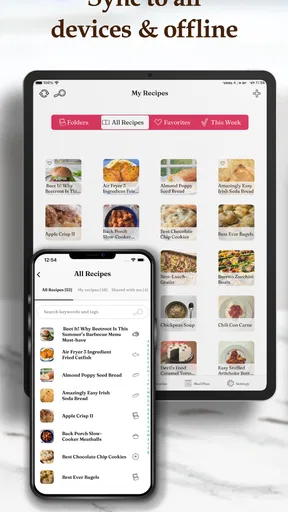
An added bonus is the ability to sync your recipes across multiple devices. Start on your tablet at home and continue on your phone at the grocery store. It’s seamless and ensures that your treasured recipes are always at your fingertips, no matter where you are.
That flexibility suits people who naturally switch between a larger screen at home and a phone while out. I can imagine browsing and tidying a recipe collection on a tablet, then checking the saved dish or shopping list when I am away from the kitchen. It is one less reason to keep separate copies in different places. If I depend on a recipe at a particular moment, I would still make sure the device I plan to use is ready and that the relevant item is easy to locate; syncing is most reassuring when I have kept the collection organized.
It is worth distinguishing this from the usual alternatives. A folder of screenshots is quick to start and works for occasional saves, but it becomes difficult to search once images pile up. Browser bookmarks are convenient for recipes that remain online, yet they do not provide the same single place for cards, screenshots, and personal favourites. A notes app can be flexible, but it often asks the user to invent a filing system. OrganizEat’s appeal is that it gives recipe collecting its own structure, including categories, tags, ratings, a shopping list, sharing, and access across devices. If I only save a recipe now and then, a basic notes folder may be enough; if I regularly cook from a mixed collection, a dedicated recipe box feels more purposeful.
One question many people have is whether they need to type every recipe by hand. The image and screenshot options make that unnecessary for a simple record, which is a real advantage when the original card or saved image is what matters. I would nevertheless take care with long-term favourites: a clear title and useful organization make a captured recipe much more practical than an unnamed image in a large collection. Another natural question is whether the app helps with the entire meal decision. It supports browsing saved recipes and moving ingredients onto a list, but I still have to choose what to cook and check what I already have.
The free entry point makes it reasonable to try the workflow before committing to a paid option. In-app purchases range from $8.99 to $109.99 per item, so I would look at the available options in the app and decide whether any paid features match my needs rather than assume that a purchase is necessary. Someone who only wants to store a modest set of recipes may be satisfied with a lighter approach; a person who wants to build a more substantial personal collection may be more willing to consider additional paid functionality. Either way, I would first see whether capturing, finding, and using recipes becomes a habit.
There are also good reasons to skip a dedicated organizer. If I rely on discovering new recipes through a cooking website or video platform, a recipe box is not a replacement for those sources. If I prefer paper and already know where everything is, moving the collection may feel like unnecessary housekeeping. And if I want a tool to make meal choices for me, the core benefit here is not automatic decision-making; it is keeping my own recipes accessible and helping me act on them. That distinction matters, because an organizer earns its place only when I actually return to the recipes I have saved.
For a first week, I would keep the test simple: save a few recipes I already cook, label them in a way I understand, and use one to build a shopping list. Then I would try finding a dish by a category or tag rather than relying on memory. If that makes an ordinary meal easier, the app is solving a real problem. If I keep forgetting to open it, adding more recipes will not fix the underlying mismatch in habits.
To wrap it up, OrganizEat: Recipe Keeper Book is more than just an app; it’s a kitchen companion. It’s perfect for anyone looking to streamline their cooking process and keep their favorite recipes organized and accessible. Whether you’re a seasoned chef or just starting out, this app is worth a try. Ready to declutter your recipe collection? Download OrganizEat and start cooking up a storm!
Pros
- Easy to organize and categorize recipes.
- User-friendly interface for all ages.
- Supports photo-based recipe entries.
- Offline access to saved recipes.
- Syncs across multiple devices seamlessly.
Cons
- Limited free version features.
- No option for ingredient substitutes.
- Occasional sync delays reported.
- No integration with grocery apps.
- Requires manual data entry for recipes.
FAQs for OrganizEat: Recipe Keeper Book
What platforms is OrganizEat available on?
OrganizEat is available for both Android and iOS devices. You can download it from the Google Play Store for Android devices or the Apple App Store for iOS devices. The app is designed to work seamlessly on smartphones and tablets, ensuring that you can access your recipes wherever you are.
Can I import recipes from other sources into OrganizEat?
Yes, OrganizEat allows you to easily import recipes from various sources. You can add recipes by taking photos of your existing recipe cards, typing them in manually, or importing them from websites. This flexibility ensures that all your favorite recipes are stored in one convenient location.
Is there a limit to the number of recipes I can store in OrganizEat?
OrganizEat offers different subscription plans, which may affect the number of recipes you can store. The free version allows for a limited number of recipes, while the premium subscription offers unlimited storage. This ensures you can choose a plan that best suits your cooking needs.
Does OrganizEat offer any meal planning features?
While OrganizEat primarily focuses on recipe organization, it does provide basic meal planning features. You can create shopping lists based on your recipes and plan meals for the week. However, for more advanced meal planning features, you might need to use additional apps.
How secure is my data in OrganizEat?
OrganizEat takes data security seriously, using cloud storage to back up your recipes and ensure they are safe. This means even if you change devices, your recipes remain intact. Additionally, the app provides privacy settings to ensure your data is protected and only accessible to you.


